Introduction
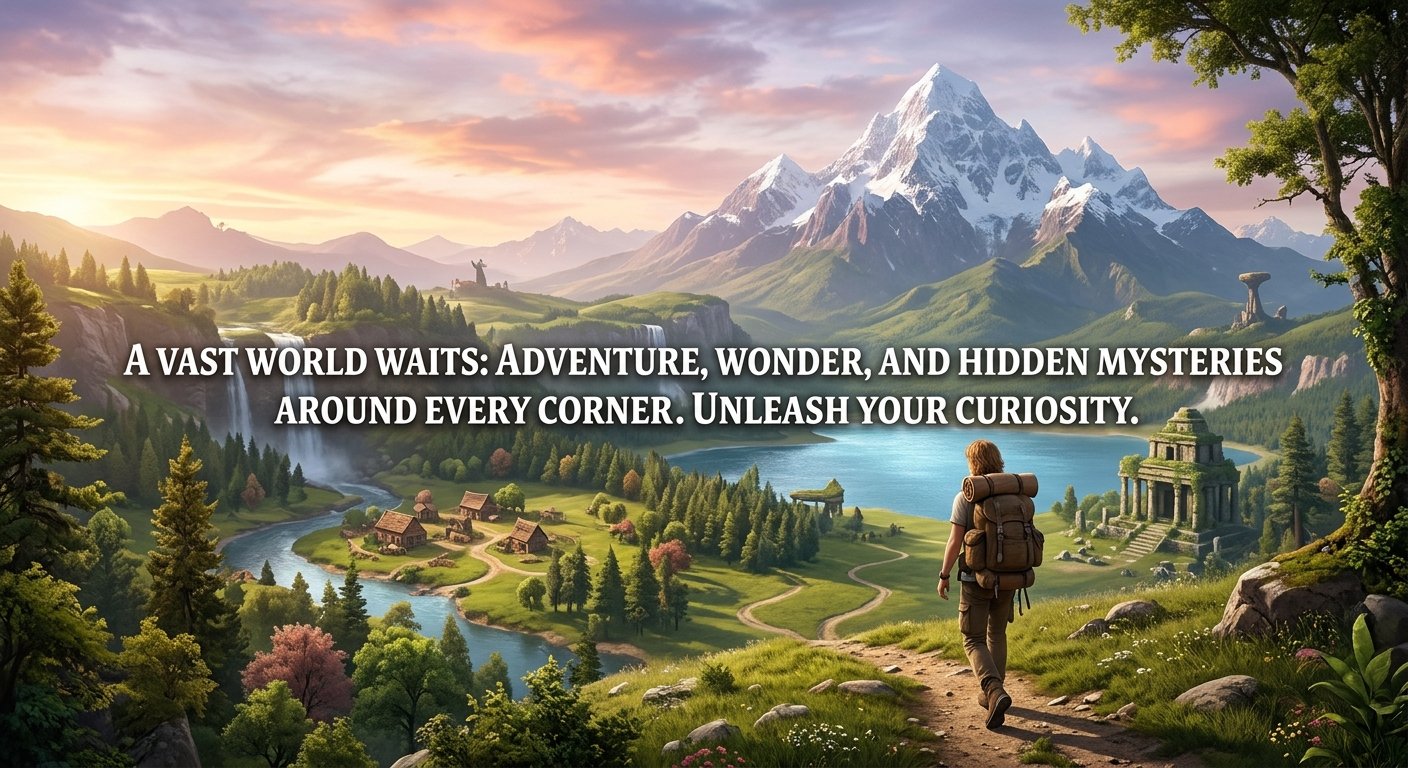
Video games have become much more than simple activities designed to entertain players for a few minutes. Modern gaming offers enormous digital environments where people can explore unfamiliar locations, discover hidden secrets, complete challenging missions, interact with characters, and create their own adventures. Among the different types of video games, open-world games have become especially popular because they give players the freedom to experience virtual worlds in their own way.
Unlike traditional games that usually follow a fixed sequence of levels, open-world games allow players to explore large environments with fewer restrictions. Players can travel through cities, forests, mountains, deserts, oceans, and fictional worlds while deciding which activities they want to complete. Some players prefer following the main storyline, while others enjoy exploring unknown locations, collecting items, completing side missions, or simply travelling around the game world.
Popular titles such as Grand Theft Auto V, Red Dead Redemption 2, Minecraft, The Legend of Zelda: Breath of the Wild, and Elden Ring demonstrate how different open-world experiences can be. Each game offers its own environment, gameplay systems, challenges, and opportunities for exploration.
The popularity of open-world games comes from their ability to combine freedom, creativity, adventure, storytelling, and discovery. Players are not simply watching a story unfold; they become active participants in a world that responds to their actions.
This article explores what open-world games are, why gamers enjoy exploring virtual worlds, the features that make these games special, popular examples, and how technology may shape their future.
1. What Are Open World Games?
Open-world games are video games that allow players to explore large digital environments without following a completely fixed path. They usually provide a central storyline, but players can often choose when and how to complete different activities.
In a traditional linear game, the player generally progresses through a sequence of levels or missions. The next area may remain unavailable until a particular objective has been completed. Open-world games provide greater freedom by allowing players to visit different locations and discover activities independently.
For example, in an open-world adventure, a player might begin with a main mission but decide to explore a nearby village, climb a mountain, collect resources, or help another character instead.
The environment becomes an important part of the experience. Players can discover hidden locations, interact with objects, meet different characters, and encounter unexpected events.
Open-world games can belong to many genres, including action, adventure, role-playing, survival, racing, and simulation. Their defining characteristic is not simply the size of the map but the freedom they provide for exploration and interaction.
2. Freedom of Exploration Makes Every Adventure Different
One of the biggest reasons gamers love open-world games is the freedom to explore.
Players are not always required to follow the same route or complete every mission in a specific order. They can decide where to go, what to investigate, and how to spend their time.
This freedom makes gaming feel more personal. Two players may begin the same game but experience completely different adventures because they make different choices.
For example, one player may spend hours exploring a large city, discovering buildings, and completing side activities. Another may focus entirely on the main storyline and its important missions.
Some players enjoy finding secret locations, while others prefer fighting enemies, collecting valuable items, or discovering new landscapes.
The ability to choose creates a strong sense of independence. Players feel that they are controlling their own journey instead of simply following instructions.
This is why exploration remains one of the most attractive features of open-world gaming.
3. Massive Virtual Worlds Create a Sense of Adventure
Open-world games often feature enormous environments that make players feel as if they are travelling through another world.
These environments may include modern cities, ancient kingdoms, futuristic planets, forests, mountains, deserts, islands, and underwater locations.
Developers carefully design these areas to provide different visual experiences and gameplay opportunities.
A city might contain busy streets, shops, buildings, vehicles, and pedestrians. A forest may feature wildlife, hidden paths, natural resources, and dangerous creatures. A mountainous region may offer difficult climbing challenges and beautiful views.
The variety of environments makes exploration exciting because players never know exactly what they might discover next.
Large virtual worlds also create a sense of scale. Travelling from one region to another can make the game feel like a real journey rather than a series of disconnected levels.
For many gamers, discovering a beautiful or mysterious location is just as enjoyable as completing a difficult mission.
4. Grand Theft Auto V: Exploring a Living City
Grand Theft Auto V is one of the most recognizable examples of an open-world video game.
Developed by Rockstar Games, the title takes place in Los Santos and its surrounding areas, inspired by Southern California.
The game allows players to explore a large environment containing roads, residential areas, beaches, mountains, businesses, and countryside locations.
Players can drive different vehicles, participate in activities, complete missions, explore the environment, and experience the world through three main protagonists.
One reason GTA V remains popular is the variety of things players can do outside the main storyline. They can explore the city, discover interesting locations, interact with the environment, and participate in different activities.
Grand Theft Auto Online extends the experience by allowing players to interact with other people in an evolving online environment.
The game demonstrates how a detailed city, player freedom, and varied activities can create a memorable open-world experience.
5. Red Dead Redemption 2: A Beautiful and Detailed Natural World
Red Dead Redemption 2 is widely regarded as one of the most detailed open-world games ever created.
Developed by Rockstar Games, it takes players into a fictional version of the American frontier during the late nineteenth century.
The environment includes forests, rivers, mountains, villages, towns, farms, and wide open landscapes.
Players explore the world as Arthur Morgan, a member of the Van der Linde gang. Along the way, they experience a detailed story and interact with different characters.
The game’s world feels distinctive because of its environmental details. Weather changes, wildlife moves through natural habitats, and different locations have their own atmosphere.
Players can travel on horseback, hunt animals, fish, discover settlements, and explore places away from the main missions.
These activities create a sense of living inside a virtual world rather than simply completing a list of objectives.
Red Dead Redemption 2 demonstrates how realistic environments and environmental storytelling can make exploration emotionally engaging.
6. Minecraft: A World Limited Mainly by Imagination
Minecraft offers a very different type of open-world experience.
Instead of focusing on realistic graphics, the game uses a distinctive block-based visual style. Players explore a world made from different materials, environments, and resources.
They can collect materials, build structures, create tools, explore caves, fight creatures, and develop entire communities.
One of Minecraft’s most important features is creative freedom. Players can construct houses, castles, farms, cities, machines, and imaginative landscapes.
The game also provides different modes for different experiences. Survival mode focuses on gathering resources and managing dangers, while Creative mode gives players access to resources for building and experimentation.
Minecraft demonstrates that an open world does not need highly realistic graphics to be enjoyable.
Its popularity comes from exploration, creativity, freedom, and the ability to shape the environment according to individual ideas.
7. The Legend of Zelda: Breath of the Wild and Tears of the Kingdom
The Legend of Zelda: Breath of the Wild introduced a highly flexible approach to open-world adventure.
Players explore the kingdom of Hyrule, where mountains, forests, villages, ruins, and other locations create opportunities for discovery.
The game encourages experimentation. Players can climb many surfaces, use environmental objects, solve puzzles, and approach challenges in different ways.
Its sequel, The Legend of Zelda: Tears of the Kingdom, expands the experience with additional exploration possibilities and creative gameplay systems.
Players can discover new locations, solve environmental puzzles, and experiment with objects to overcome obstacles.
These games demonstrate that exploration becomes more rewarding when players are encouraged to think creatively instead of following only one solution.
8. The Excitement of Discovering Hidden Secrets
Hidden secrets are another important reason why open-world games attract players.
Developers often place hidden caves, rare items, mysterious locations, secret missions, and unexpected discoveries throughout the game world.
Players who explore carefully may find things that are not immediately visible on the map.
Some secrets require solving puzzles, defeating powerful enemies, or completing specific activities. Others can be discovered simply by travelling away from common routes.
The possibility of finding something unexpected creates curiosity.
Players may continue exploring because they want to know what is behind a mountain, inside an abandoned building, or at the end of an unfamiliar path.
These discoveries can make the experience feel rewarding even when players are not completing the main storyline.
Hidden content also encourages communities to share discoveries, discuss mysteries, and help other players find rare locations.
9. Side Missions Make the World More Interesting
Open-world games often include side missions that exist outside the main storyline.
These missions may involve helping characters, finding lost objects, solving problems, exploring unusual locations, or completing challenges.
Side missions give players more reasons to explore the world.
They can also introduce interesting characters and provide additional information about the game’s setting.
For example, a player may discover a small settlement and receive a task from someone living there. Completing that task might reveal another location or introduce a new storyline.
Side missions also give players more control over their progress. They can complete them whenever they want instead of following a strict sequence.
When designed properly, these activities make the game world feel more complete and meaningful.
10. Realistic Graphics Improve Virtual Exploration
Graphics play an important role in creating believable open-world environments.
Modern game developers use advanced rendering techniques, detailed textures, realistic lighting, shadows, and animation to make virtual locations visually engaging.
Realistic graphics can help players appreciate the details of a city, forest, ocean, or mountain range.
For example, changing sunlight can affect the appearance of buildings, while rain and fog can create different atmospheres.
Character animation also contributes to realism. Natural movement and believable interactions make the environment feel more convincing.
However, impressive graphics are not the only requirement for a successful open-world game. A visually beautiful world must also contain interesting activities and meaningful exploration opportunities.
A well-designed environment combines visual quality with gameplay, atmosphere, and interaction.
11. Dynamic Weather and Day-Night Cycles
Many modern open-world games include changing weather and day-night systems.
These features make the environment feel more active and less predictable.
A location may look completely different during the morning, afternoon, evening, or night. Sunlight, darkness, shadows, and artificial lighting can change the atmosphere of the same place.
Weather conditions may include rain, snow, storms, fog, wind, and clear skies.
These systems can also affect gameplay. Rain may reduce visibility, darkness may make certain areas more dangerous, and snow may change the appearance of roads and landscapes.
In some games, environmental conditions influence wildlife, character behaviour, or available activities.
Dynamic weather and time systems make exploration more interesting because players experience the world under changing conditions.
12. Freedom to Choose Different Playstyles
Open-world games allow players to approach challenges in different ways.
Some players prefer direct combat, while others use stealth, exploration, strategy, or creative problem-solving.
In role-playing games, players may also customize characters, select abilities, choose equipment, and develop different skills.
For example, one player might focus on powerful weapons and direct attacks. Another may prefer avoiding enemies or using long-range strategies.
This flexibility creates variety and allows players to develop their own approach.
The ability to experiment also increases replay value. Players may return to a game and try a different character build, strategy, or route.
Open-world gaming becomes more enjoyable when players can express their preferences through gameplay choices.
13. Character Development and Personal Progress
Many open-world games include character progression systems.
Players may earn experience points, unlock abilities, collect equipment, improve weapons, and develop new skills.
These systems give exploration a sense of purpose.
A player might discover a hidden location and receive a useful item. Completing a side mission may unlock a new ability or provide resources for future challenges.
Progression also creates long-term goals. Players can gradually improve their characters and prepare for more difficult missions.
Role-playing games often provide particularly detailed progression systems, allowing players to make choices that influence how their characters develop.
This sense of improvement encourages players to continue exploring and experimenting.
14. Social Interaction in Online Open Worlds
Open-world gaming is not limited to single-player experiences.
Many games provide online environments where players can meet, cooperate, compete, and communicate.
For example, Grand Theft Auto Online allows players to participate in different activities and missions together. Minecraft offers multiplayer worlds where friends can build structures, explore locations, and create shared projects.
Online interaction adds another layer to exploration.
Players can discover locations together, organize challenges, exchange resources, and create their own activities.
Communities also form around shared experiences. People discuss strategies, share screenshots, publish videos, and help one another discover hidden features.
This social aspect can make virtual worlds feel more meaningful because players are creating memories with other people.
15. Creativity and Building in Sandbox Games
Sandbox games are closely connected to open-world gaming because they often allow players to experiment with the environment.
Instead of focusing only on completing missions, sandbox experiences give players tools to create, modify, and organize virtual spaces.
Minecraft is a famous example because players can construct almost anything using the available building materials.
Some other games provide tools for designing vehicles, creating structures, customizing characters, or developing user-generated content.
Creativity gives players a different reason to explore. They may search for rare resources, find suitable building locations, or collect materials for a large project.
Sandbox gameplay also encourages experimentation. Players can test ideas, make mistakes, and improve their creations.
This freedom is especially attractive to gamers who enjoy designing things rather than simply following a storyline.
16. Exploration Games and Emotional Storytelling
Open-world games can use exploration to communicate stories and emotions.
Not every story needs to be explained through dialogue or cinematic scenes. Sometimes the environment itself provides important information.
An abandoned building may suggest that something happened there in the past. A destroyed settlement may reveal the consequences of a conflict. A forgotten object may provide clues about a character’s history.
This technique is often called environmental storytelling.
Players gradually understand the world by observing locations and discovering details.
Exploration can also create emotional experiences. A beautiful landscape may encourage players to pause and appreciate the environment, while a mysterious or dangerous area can create tension.
When storytelling and exploration work together, players become more connected to the virtual world.
17. Survival and Resource Management
Some open-world games combine exploration with survival mechanics.
Players must collect food, water, materials, equipment, and other resources to remain safe.
They may also need to manage health, temperature, stamina, and other survival conditions.
These systems make exploration more challenging because players must consider their decisions.
Travelling into a dangerous region without sufficient supplies may create serious problems. Finding a safe location or collecting useful materials can become an important achievement.
Survival games also encourage players to understand their surroundings.
Forests may provide wood, caves may contain valuable resources, and dangerous areas may offer rare rewards.
The combination of exploration and survival creates tension, strategy, and a strong sense of accomplishment.
18. Open-World Racing Games
Open-world exploration is also popular in racing games.
Traditional racing games often focus on tracks and specific competitions. Open-world racing games allow players to drive through large environments and discover different roads and activities.
For example, the Forza Horizon series provides large driving environments where players can explore cities, countryside areas, and different landscapes.
Players can participate in races, discover vehicles, complete challenges, and customize their driving experience.
The freedom to travel around the map makes these games appealing to people who enjoy cars and exploration.
Open-world racing also allows players to appreciate vehicle design and environmental details outside competitive events.
19. The Role of Music and Sound in Virtual Worlds
Sound design is essential for creating an immersive open-world experience.
Background music can establish the atmosphere of a location, while environmental sounds help make the world feel active.
Players may hear birds in forests, traffic in cities, wind in mountains, waves near beaches, or distant activity in populated areas.
These sounds provide information about the surroundings and strengthen the feeling of being present in the environment.
Music can also support storytelling and emotional moments. A peaceful soundtrack may make exploration relaxing, while dramatic music can increase tension during dangerous encounters.
Audio design is particularly important because it allows developers to communicate atmosphere even when players are not looking directly at something.
20. Open-World Games Encourage Curiosity
Curiosity is one of the strongest motivations behind exploration.
Players often want to discover what exists beyond a visible mountain, behind a locked door, or inside an unfamiliar building.
Open-world games encourage this behaviour by placing interesting locations and activities throughout the environment.
The desire to discover something new can keep players engaged even without immediate rewards.
Sometimes the reward is simply finding a beautiful location or understanding an interesting part of the game’s story.
Curiosity also creates conversations within gaming communities. Players exchange theories, discuss unusual discoveries, and share information about hidden areas.
A well-designed open world makes players feel that there is always something new to discover.
21. The Challenges of Designing Large Virtual Worlds
Although open-world games provide exciting experiences, creating them is extremely difficult.
Developers must build environments that are large enough to encourage exploration but interesting enough to avoid feeling empty.
A huge map is not automatically a good map. If players spend too much time travelling through areas without meaningful activities, the experience may become repetitive.
Developers must also manage technical performance. Large environments can contain many characters, objects, buildings, and environmental effects.
These systems must work smoothly across the intended platforms.
Another challenge is maintaining consistency. The world should feel believable, and its different regions should fit together naturally.
Testing is especially important because players can approach locations and missions in many different ways.
Successful open-world design requires a balance between size, detail, freedom, performance, and meaningful activities.
22. Can Open-World Games Become Repetitive?
Despite their popularity, open-world games sometimes face criticism for repetitive missions and activities.
A game may contain a large map but rely on the same types of tasks throughout the experience.
For example, players might repeatedly collect objects, clear enemy camps, or complete similar side missions.
When activities lack variety, exploration can become less exciting.
Developers can reduce repetition by creating meaningful side stories, unique locations, interesting characters, environmental challenges, and different gameplay systems.
Players also appreciate when exploration leads to unexpected discoveries rather than simply another marker on the map.
The best open-world experiences give players reasons to explore beyond completing a checklist.
23. The Future of Open-World Gaming
The future of open-world games is likely to involve improvements in artificial intelligence, graphics, environmental simulation, and multiplayer technology.
Artificial intelligence may help create more responsive characters and dynamic interactions. Non-player characters could potentially react more naturally to player actions and changing situations.
Improved game engines may allow developers to create more detailed environments, realistic lighting, and advanced physics.
Virtual reality could also introduce new ways to experience digital worlds, allowing players to explore environments through immersive technology.
Cloud gaming may support access to demanding games across different devices, depending on network performance and platform availability.
Procedural generation may help developers create large environments and varied content, although carefully designed locations will remain important for meaningful exploration.
The future of open-world gaming will not simply be about making maps larger. The real challenge will be creating worlds that feel believable, interactive, and worth exploring.
24. Why Open-World Games Will Remain Popular
Open-world games combine several features that appeal to different types of players.
Some people enjoy adventure and exploration, while others prefer storytelling, combat, racing, building, or social interaction.
Because open-world games can combine these activities, they attract a broad gaming audience.
They also provide opportunities for players to create their own experiences. One person may spend hours exploring, while another focuses on missions or character progression.
This flexibility gives games long-term value and encourages players to return to familiar environments.
As technology improves, developers will have more opportunities to create detailed worlds and meaningful interactions.
Open-world games are likely to remain an important part of the gaming industry because they offer something that many players value: the freedom to decide what happens next.
Conclusion
Open-world games have changed the way people experience video games by providing freedom, exploration, creativity, and immersive virtual environments.
Instead of following a completely fixed path, players can discover locations, complete missions, interact with characters, collect resources, and create their own adventures.
Games such as Grand Theft Auto V, Red Dead Redemption 2, Minecraft, The Legend of Zelda: Breath of the Wild, and Forza Horizon demonstrate the variety of experiences that open-world gaming can offer.
The popularity of these games comes from their ability to make players feel involved in a living digital environment. Beautiful landscapes, hidden secrets, side missions, character development, and social interaction all contribute to the experience.
Although designing large virtual worlds creates technical and creative challenges, developers continue to find new ways to make exploration more interesting.
As artificial intelligence, graphics technology, and immersive platforms develop, open-world games may become even more interactive and realistic.
Ultimately, gamers love exploring virtual worlds because these experiences provide freedom, discovery, and adventures that can feel different every time they play.
Frequently Asked Questions (FAQs)
1. What are open-world games?
Open-world games are video games that allow players to explore large environments and complete activities with a high degree of freedom instead of following only a fixed sequence of levels.
2. Why do gamers love open-world games?
Gamers enjoy open-world games because they provide exploration, freedom, creativity, interesting stories, hidden secrets, and opportunities to experience virtual environments in different ways.
3. What are the best open-world games?
Popular open-world games include Grand Theft Auto V, Red Dead Redemption 2, Minecraft, The Legend of Zelda: Breath of the Wild, Elden Ring, and Forza Horizon 5.
4. What is the difference between open-world and linear games?
Open-world games generally allow players to explore environments and choose activities more freely. Linear games usually follow a more structured sequence of missions or levels.
5. Is Minecraft an open-world game?
Yes. Minecraft provides large worlds where players can explore, collect resources, build structures, survive challenges, and create their own experiences.
6. Are open-world games suitable for beginners?
Many open-world games are suitable for beginners, although their difficulty and complexity vary. Players can often explore at their own pace and learn different systems gradually.
7. What makes a good open-world game?
A good open-world game combines meaningful exploration, interesting locations, enjoyable gameplay, believable environments, varied activities, and a rewarding sense of discovery.
8. Are all open-world games multiplayer?
No. Some open-world games are designed mainly for single-player experiences, while others provide multiplayer features that allow people to explore and play together.
9. Why are open-world games so large?
Large environments give players opportunities to explore different regions, discover hidden content, complete missions, and experience a more expansive virtual world.
10. What is the future of open-world gaming?
Future open-world games may include more advanced artificial intelligence, realistic graphics, dynamic environments, improved multiplayer systems, and new immersive technologies.
Leave a Reply