Introduction
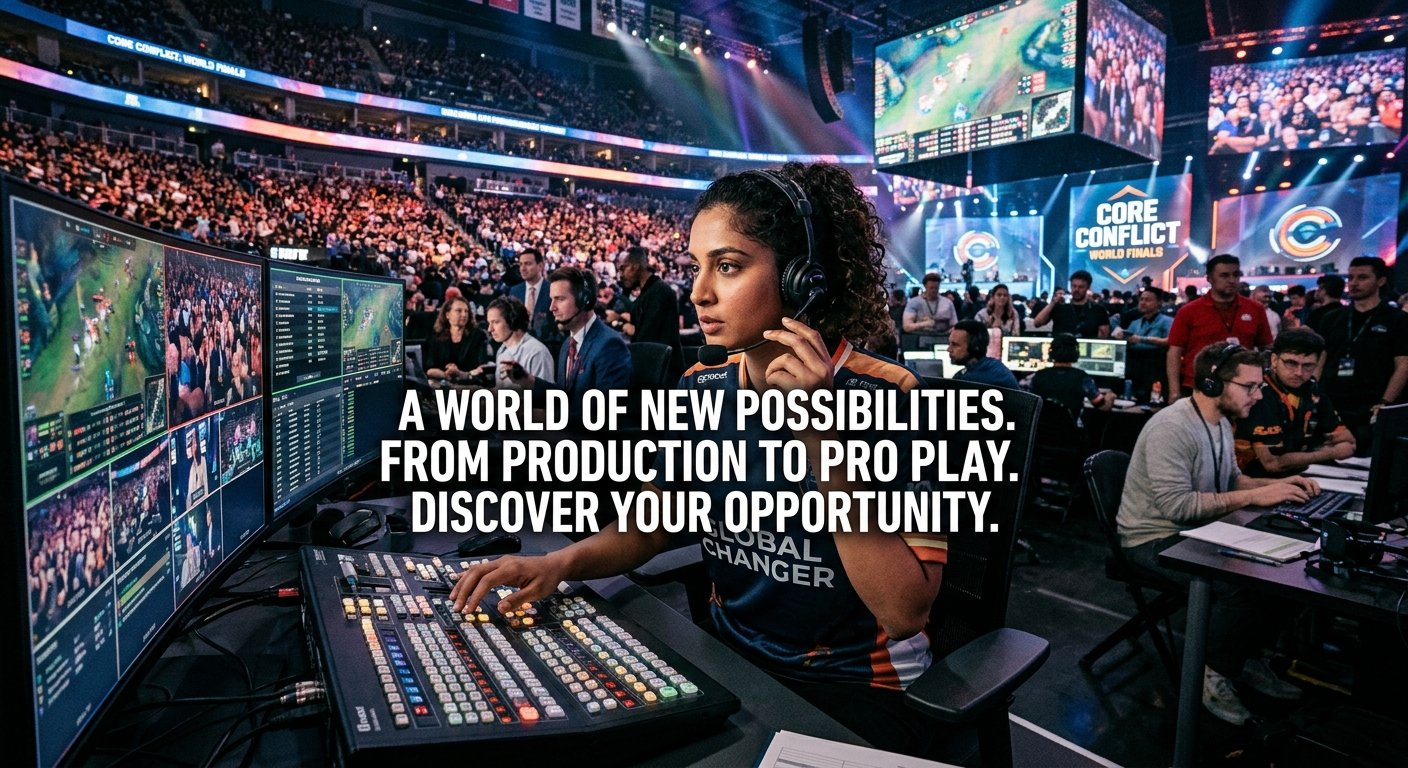
Video games have developed from simple electronic entertainment into one of the world’s most influential digital industries. In the past, gaming was mainly considered a hobby for children and young people. Today, it has become a professional field that offers opportunities in technology, creativity, entertainment, business, education, and digital communication. Millions of people around the world play video games, watch gaming content, participate in esports competitions, and follow gaming communities.
As the gaming industry continues to expand, it creates new jobs for people with different interests and abilities. Some professionals develop games, while others design characters, create music, test software, manage esports teams, produce online content, or promote gaming products. These careers require a combination of technical knowledge, creativity, communication skills, and problem-solving abilities.
Video games are also changing how people think about employment. A person does not necessarily need to work in a traditional office to build a career in gaming. Developers can work remotely, content creators can reach international audiences, and esports professionals can compete in tournaments across different countries.
This article explores how video games are creating career opportunities, the major professions available in the gaming industry, the skills required to enter this field, and the future of gaming-related employment.
1. The Growth of the Gaming Industry
The gaming industry has experienced remarkable growth over the last few decades. Improvements in computers, smartphones, internet connections, gaming consoles, and software have made video games accessible to people from different countries and age groups.
Gaming is no longer limited to expensive computers or dedicated consoles. Smartphones allow millions of people to play games wherever they are. Online platforms make it possible for players to compete, communicate, and share experiences with others around the world.
This growth has increased the demand for professionals who can create, manage, improve, and promote video games. Companies need programmers, designers, artists, sound engineers, marketing specialists, cybersecurity professionals, and many other experts.
The industry also supports businesses that provide services around gaming, including tournament organization, streaming platforms, gaming equipment, event management, and digital advertising.
As a result, gaming has become an important source of employment and entrepreneurship.
2. Game Development as a Professional Career
Game development is one of the most important career opportunities in the gaming industry. It involves designing, programming, building, and improving video games for different platforms.
Game developers work with teams to transform creative ideas into playable experiences. They may develop mobile games, computer games, console titles, educational games, or virtual reality experiences.
A game development team usually includes programmers, designers, artists, animators, sound specialists, and project managers.
People interested in programming can explore languages and technologies such as C++, C#, Python, and game development engines. Popular tools include Unity and Unreal Engine.
Game development is suitable for people who enjoy technology, logical thinking, creativity, and solving complex problems. It also offers opportunities to work for established studios or create independent games.
3. Game Programmer
A game programmer writes the code that makes a video game function. Programming controls important features such as character movement, player actions, physics, artificial intelligence, user interfaces, and online multiplayer systems.
For example, when a player moves a character, jumps over an obstacle, or interacts with an object, programming determines how those actions work.
Game programmers may specialize in different areas:
- Gameplay programming
- Graphics programming
- Artificial intelligence programming
- Physics programming
- Multiplayer and network programming
- Engine development
- User interface programming
This profession requires knowledge of programming languages, algorithms, data structures, debugging, and software development.
Computer science students can build a foundation for this career through programming practice and personal projects. Creating a small game is a useful way to understand how coding concepts are applied in real products.
4. Game Designer
Game designers develop the concepts, rules, systems, and experiences that make games interesting and enjoyable.
They decide how players interact with the game, what challenges they face, how levels are structured, and how rewards and progression systems work.
A game designer may work on:
- Game mechanics
- Character abilities
- Levels and missions
- Difficulty systems
- Story progression
- Player rewards
- Multiplayer features
Game designers need creativity, analytical thinking, communication skills, and an understanding of player behavior.
They often collaborate with programmers and artists to ensure that their ideas can be implemented successfully.
A strong game designer does not simply create attractive ideas. They also consider whether the game is understandable, balanced, enjoyable, and technically possible.
5. Game Artist and Graphic Designer
Visual presentation is an essential part of modern video games. Game artists create the characters, environments, objects, textures, and visual effects that give games their appearance.
There are several specializations in game art:
2D Artist: Creates illustrations, icons, backgrounds, and two-dimensional characters.
3D Artist: Builds three-dimensional models of characters, buildings, weapons, vehicles, and environments.
Character Artist: Designs and develops the appearance of characters.
Environment Artist: Creates landscapes, cities, rooms, and other locations.
Concept Artist: Produces early visual ideas that guide the game’s artistic direction.
Visual Effects Artist: Creates effects such as explosions, fire, smoke, magic, and weather.
These careers are suitable for people interested in drawing, digital illustration, animation, and visual storytelling.
Knowledge of tools such as Blender, Photoshop, and other professional design software can help candidates develop their skills.
6. Animation and Motion Design Careers
Animation makes video game characters and environments feel alive. Animators create movements such as walking, running, jumping, fighting, dancing, and interacting with objects.
Modern games often use detailed animation systems to make character movements appear natural and responsive.
Animation professionals may work as:
- Character animators
- 3D animators
- Motion designers
- Technical animators
- Facial animation specialists
- Motion capture technicians
Some studios also use motion capture technology to record the movements of real performers and apply them to digital characters.
This field combines artistic ability with technical understanding. People who enjoy movement, visual storytelling, and digital creativity can explore animation as a career.
7. Esports: A New Professional Industry
Esports, or electronic sports, refers to organized competitive video gaming. Professional players and teams compete in tournaments and leagues, sometimes for substantial prize money.
Popular competitive titles include games such as Counter-Strike 2, Dota 2, League of Legends, Valorant, and PUBG Mobile.
Esports has created professional opportunities beyond playing games.
Some major career options include:
- Professional esports player
- Team coach
- Tournament organizer
- Esports manager
- Team analyst
- Commentator
- Competition administrator
- Esports journalist
Professional players usually need excellent game knowledge, quick decision-making, teamwork, communication, and consistent practice.
However, becoming a professional player is highly competitive. Only a small percentage of players reach the highest levels, so people interested in esports should also explore supporting professions.
8. Gaming Content Creation and Streaming
Content creation has become one of the most visible career paths connected to video games.
Gaming creators produce videos, livestreams, tutorials, reviews, gameplay highlights, and entertainment content for online audiences.
Platforms such as YouTube and Twitch allow creators to build communities around their favorite games.
A gaming content creator may specialize in:
- Gameplay videos
- Game reviews
- Gaming news
- Tutorials and guides
- Live streaming
- Esports analysis
- Funny gaming moments
- Gaming challenges
Creators can potentially earn money through advertising, sponsorships, memberships, subscriptions, and other platform-supported features. Availability and eligibility depend on the platform’s rules and the creator’s location.
Successful content creation requires more than playing games. Creators need communication skills, editing knowledge, consistency, creativity, and an understanding of their audience.
Although this career can offer flexibility, building a stable audience often takes considerable time and effort.
9. Game Testing and Quality Assurance
Before a video game is released, it must be tested to identify errors and improve the player experience.
Game testers and quality assurance professionals examine games to find problems such as crashes, graphical glitches, incorrect controls, performance issues, and broken missions.
Their responsibilities may include:
- Testing different levels
- Checking gameplay features
- Identifying software bugs
- Repeating test scenarios
- Reporting technical problems
- Checking updates and patches
- Verifying that reported issues have been fixed
Quality assurance is an important part of professional game development because even small technical problems can negatively affect players.
People interested in this field should develop observation skills, patience, attention to detail, and the ability to write clear bug reports.
Game testing can be an entry point into the industry, although it does not automatically lead to a game development position.
10. Sound Design and Music Production
Audio plays a major role in creating an immersive gaming experience. Sound designers and music composers develop the sounds that players hear during gameplay.
These sounds include footsteps, explosions, vehicle engines, background music, environmental effects, character voices, and menu interactions.
Sound-related careers include:
Sound Designer: Creates and edits sound effects.
Music Composer: Produces original music for games.
Audio Programmer: Develops the systems that control how game audio works.
Voice Director: Helps manage voice performances and dialogue recording.
Voice Actor: Performs character dialogue and other spoken content.
Professional audio work requires creativity and knowledge of recording, editing, mixing, and sound production tools.
A good sound design team can make a game feel more realistic, emotional, and memorable.
11. Game Writing and Storytelling
Many modern games contain detailed stories, fictional worlds, memorable characters, and complex dialogue.
Game writers create the narrative content that gives players a reason to explore the game world and connect with its characters.
Their work may include:
- Main storylines
- Character backgrounds
- Dialogue
- Mission descriptions
- Side quests
- In-game documents
- World-building
- Interactive narratives
Unlike traditional writing, game writing often requires an understanding of player choices and interactive storytelling.
For example, a game may allow players to make decisions that change relationships, missions, or the ending of the story.
People with strong writing skills and imagination can explore this career path.
12. Gaming Marketing and Social Media Management
Creating a good video game is only one part of running a successful gaming business. Companies must also introduce their products to audiences and maintain relationships with players.
Gaming marketing professionals promote games through advertising campaigns, social media, partnerships, events, and online communities.
Possible job roles include:
- Digital marketing specialist
- Social media manager
- Community manager
- Public relations specialist
- Brand manager
- Marketing analyst
- Influencer partnership manager
A community manager communicates with players, answers questions, collects feedback, and helps maintain a positive relationship between a game company and its audience.
These roles are suitable for people interested in communication, business, marketing, and digital platforms.
13. Gaming Journalism and Reviews
Gaming journalism provides information about the video game industry. Journalists and reviewers cover new releases, industry developments, gaming events, updates, and professional competitions.
Their work may appear in websites, magazines, blogs, podcasts, and video channels.
Gaming journalists can specialize in:
- Game reviews
- Industry news
- Interviews
- Esports reporting
- Gaming technology
- Hardware reviews
- Editorial analysis
This career requires research, writing, critical thinking, and the ability to communicate information accurately.
People who enjoy both gaming and writing can develop their skills by publishing reviews, maintaining a gaming blog, or contributing to online publications.
14. Game Production and Project Management
Large video games are usually created by teams of professionals working together over extended periods.
Game producers and project managers help organize this work. They coordinate teams, manage schedules, monitor budgets, track progress, and communicate between departments.
Their responsibilities may include:
- Planning development schedules
- Organizing team meetings
- Managing project requirements
- Tracking deadlines
- Coordinating departments
- Identifying development risks
- Communicating with stakeholders
This career is important because game development involves many connected activities.
A successful project manager needs leadership, organization, communication, decision-making, and problem-solving skills.
15. Cybersecurity and Online Game Protection
Online gaming platforms handle user accounts, personal information, purchases, in-game currencies, and multiplayer communication.
This makes security an important part of the gaming industry.
Cybersecurity professionals help protect gaming companies and players from threats such as account theft, unauthorized access, data breaches, cheating software, and online attacks.
Related career opportunities include:
- Security analyst
- Application security engineer
- Network security specialist
- Anti-cheat systems developer
- Fraud prevention specialist
- Security researcher
These professionals use technical knowledge to identify weaknesses, investigate threats, and improve system protection.
As online gaming continues to grow, cybersecurity skills are likely to remain valuable across the industry.
16. Mobile Gaming and App Development
Smartphones have made gaming accessible to people who may not own expensive computers or consoles.
Mobile games are developed for platforms such as Android and iOS. Their development requires knowledge of programming, interface design, performance optimization, testing, and mobile operating systems.
Mobile gaming creates opportunities for:
- Mobile game developers
- Android developers
- iOS developers
- UI and UX designers
- Mobile game testers
- Game monetization specialists
- Mobile performance engineers
Independent developers can also create and publish their own mobile games.
However, success requires more than releasing an application. Developers must consider user experience, compatibility, performance, marketing, updates, and player feedback.
17. Virtual Reality and Augmented Reality Careers
Virtual reality (VR) and augmented reality (AR) are introducing new ways to experience interactive entertainment.
VR places users inside computer-generated environments, while AR adds digital elements to the real world.
These technologies create opportunities for professionals who can develop immersive experiences.
Possible roles include:
- VR game developer
- AR application developer
- 3D environment designer
- Interaction designer
- Technical artist
- Spatial computing specialist
Professionals in this area may work on games, simulations, educational experiences, training applications, and interactive demonstrations.
The field combines programming, design, 3D graphics, user experience, and hardware knowledge.
18. Gaming Hardware and Technology Careers
Video games depend on powerful hardware and reliable technology. Computers, graphics cards, processors, monitors, controllers, headsets, and networking equipment all contribute to the gaming experience.
This creates opportunities in hardware engineering, technical support, product development, and performance optimization.
Some related professions include:
- Hardware engineer
- Computer technician
- Graphics performance engineer
- Network engineer
- Technical support specialist
- Product testing engineer
- Gaming equipment designer
These professionals help develop and maintain the technology that allows modern games to run smoothly.
People interested in computer hardware and electronics can explore this area of the gaming ecosystem.
19. Freelancing and Independent Game Development
The gaming industry also offers opportunities for freelancers and independent creators.
A person does not always need to join a large company to work on games. Freelancers can provide specialized services to studios, small development teams, and independent creators.
Freelance services may include:
- Game programming
- Character design
- 2D and 3D modelling
- Animation
- Sound editing
- Game testing
- Video editing
- Game writing
- UI design
Independent developers can also create their own games and publish them through digital distribution platforms.
Freelancing offers flexibility, but it requires self-management, communication, portfolio development, and the ability to find clients.
A strong portfolio is often more useful than simply claiming to have experience. It allows potential clients or employers to see what a person can actually create.
20. Educational and Training Opportunities
Gaming technology is not limited to entertainment. It is also used in education, professional training, and simulation.
Educational games can help students understand difficult subjects through interactive activities. Simulations can help professionals practice tasks in controlled digital environments.
This creates opportunities for developers and designers who specialize in learning experiences.
Related career areas include:
- Educational game developer
- Learning experience designer
- Simulation developer
- Training content designer
- Interactive media developer
For example, a simulation may help learners understand scientific processes, practice equipment operation, or explore historical environments.
These careers combine gaming technology with education and practical training.
21. Skills Required to Build a Career in Gaming
Although gaming offers many career paths, each profession requires specific abilities.
Some skills are technical, while others are creative or professional.
Technical Skills: Programming, software development, game engines, 3D modelling, animation, testing, and cybersecurity.
Creative Skills: Drawing, storytelling, music production, character design, level design, and visual communication.
Communication Skills: Teamwork, writing, presentations, feedback, and collaboration.
Problem-Solving Skills: Identifying errors, analyzing challenges, improving performance, and finding effective solutions.
Business Skills: Marketing, budgeting, project management, customer support, and entrepreneurship.
People should choose skills according to the career they want to pursue. A programmer does not need the same training as a game artist, and a gaming journalist does not need the same technical background as a cybersecurity engineer.
22. How Students Can Start a Career in the Gaming Industry
Students interested in gaming careers can begin preparing before applying for professional jobs.
The first step is to identify an area of interest. Someone who enjoys coding may choose game programming, while a creative student may prefer design, animation, or content creation.
After selecting a direction, students should focus on learning the necessary skills.
A practical starting plan includes:
- Choose one gaming career path.
- Learn the basic tools and technologies used in that field.
- Complete beginner-level projects.
- Practice regularly and improve existing work.
- Create a portfolio to display completed projects.
- Participate in online communities and development groups.
- Apply for internships, freelance projects, or entry-level positions.
For computer science students, programming fundamentals, object-oriented programming, data structures, and problem-solving can provide a useful foundation for game development.
Students should also remember that practical experience matters. A small but completed project can demonstrate skills more effectively than a long list of technologies that someone has never used.
23. Challenges of Working in the Gaming Industry
Although gaming careers can be exciting, the industry also has challenges.
Competition for professional positions can be strong, particularly in popular areas such as game design, esports, and content creation.
Game development projects may involve tight deadlines, complex technical problems, and frequent changes. Some studios also experience periods of intense workloads.
Content creators face another challenge: building and maintaining an audience. Their success may depend on platform policies, audience interest, advertising markets, and consistent content production.
Professional esports players must manage pressure, competition, training schedules, and the uncertainty of a short competitive career.
People entering the industry should develop realistic expectations. Passion for gaming is valuable, but professional success also requires discipline, continuous learning, teamwork, and practical skills.
24. The Future of Gaming Career Opportunities
The future of gaming employment is closely connected to technological development.
Artificial intelligence may support game testing, animation, procedural content creation, and development workflows. However, human professionals will continue to play important roles in creative direction, quality decisions, storytelling, and technical supervision.
Cloud gaming may expand access to games across different devices, creating demand for professionals working on streaming infrastructure, networking, and platform development.
Virtual reality, augmented reality, and spatial computing may create additional opportunities in interactive design and immersive software.
The growth of online communities and esports may also increase demand for event organizers, content creators, community managers, and digital marketing specialists.
At the same time, independent development tools are making it easier for small teams to experiment with new ideas.
The exact jobs and skills required will change as technology develops. Therefore, people who want long-term careers in gaming should remain curious, update their knowledge, and adapt to new tools.
Conclusion
Video games have become much more than a form of entertainment. They are creating career opportunities across technology, art, business, communication, education, esports, and digital media.
From game programmers and designers to professional players, streamers, testers, journalists, and cybersecurity specialists, the gaming industry offers different paths for people with different talents.
However, building a successful career requires more than simply enjoying video games. Individuals need relevant skills, practical experience, dedication, and a willingness to keep learning.
Students can begin by choosing a career direction, learning suitable tools, completing small projects, and building a portfolio. With preparation and consistent effort, gaming can become a professional field rather than just a personal hobby.
As technology continues to evolve, video games are likely to create new forms of employment and expand opportunities for the next generation of digital professionals.
Frequently Asked Questions (FAQs)
1. Can video games become a professional career?
Yes. People can build careers in game development, esports, content creation, game testing, design, marketing, animation, and many other gaming-related fields.
2. What are the most popular careers in the gaming industry?
Popular career options include game programmer, game designer, 3D artist, professional esports player, gaming content creator, game tester, and sound designer.
3. Do I need a computer science degree to work in game development?
A computer science degree can be helpful, especially for programming and technical roles. However, requirements vary by employer and position. Practical skills and a strong portfolio are also important.
4. Can students earn money through gaming?
Students may earn money through freelancing, content creation, game development, esports, or other gaming-related services. Income is not guaranteed and depends on skills, opportunities, audience, and experience.
5. Is game testing a good career option?
Game testing can be a useful entry point for people interested in software quality assurance. It requires patience, attention to detail, and the ability to identify and report problems.
6. What programming languages are useful for game development?
C++, C#, and Python are useful languages in different areas of game development. The best choice depends on the game engine, platform, and type of project.
7. Can I become a game developer without experience?
Yes. Beginners can start by learning programming or design tools and creating small projects. Building a portfolio helps demonstrate practical abilities.
8. Is esports a real profession?
Yes. Esports includes professional players, coaches, analysts, tournament organizers, commentators, and management professionals. However, becoming a top-level player is highly competitive.
9. What is the future of gaming careers?
The future may include more opportunities in artificial intelligence, cloud gaming, mobile development, virtual reality, cybersecurity, esports, and interactive entertainment.
10. How can I start a career in the gaming industry?
Choose a specific career path, learn the relevant skills, practice with real projects, build a portfolio, connect with professional communities, and look for internships or entry-level opportunities.
SEO Keywords: Video Game Career Opportunities, Careers in the Gaming Industry, Video Game Development Jobs, Game Designer Career, Esports Career Opportunities, Game Tester Jobs, Gaming Content Creator, Game Programmer, Gaming Industry Jobs, Future of Gaming Careers.
Leave a Reply