Introduction
Gaming technology has changed dramatically over the past few decades. Video games that once featured simple graphics, basic sound effects, and limited gameplay have evolved into advanced digital experiences with realistic environments, intelligent characters, online multiplayer systems, and interactive worlds. Today, gaming is not only a form of entertainment but also an important part of technological innovation.
Modern gaming combines several advanced technologies, including artificial intelligence, virtual reality, augmented reality, cloud computing, high-performance processors, and advanced graphics systems. These developments are changing how games are designed, developed, distributed, and experienced.
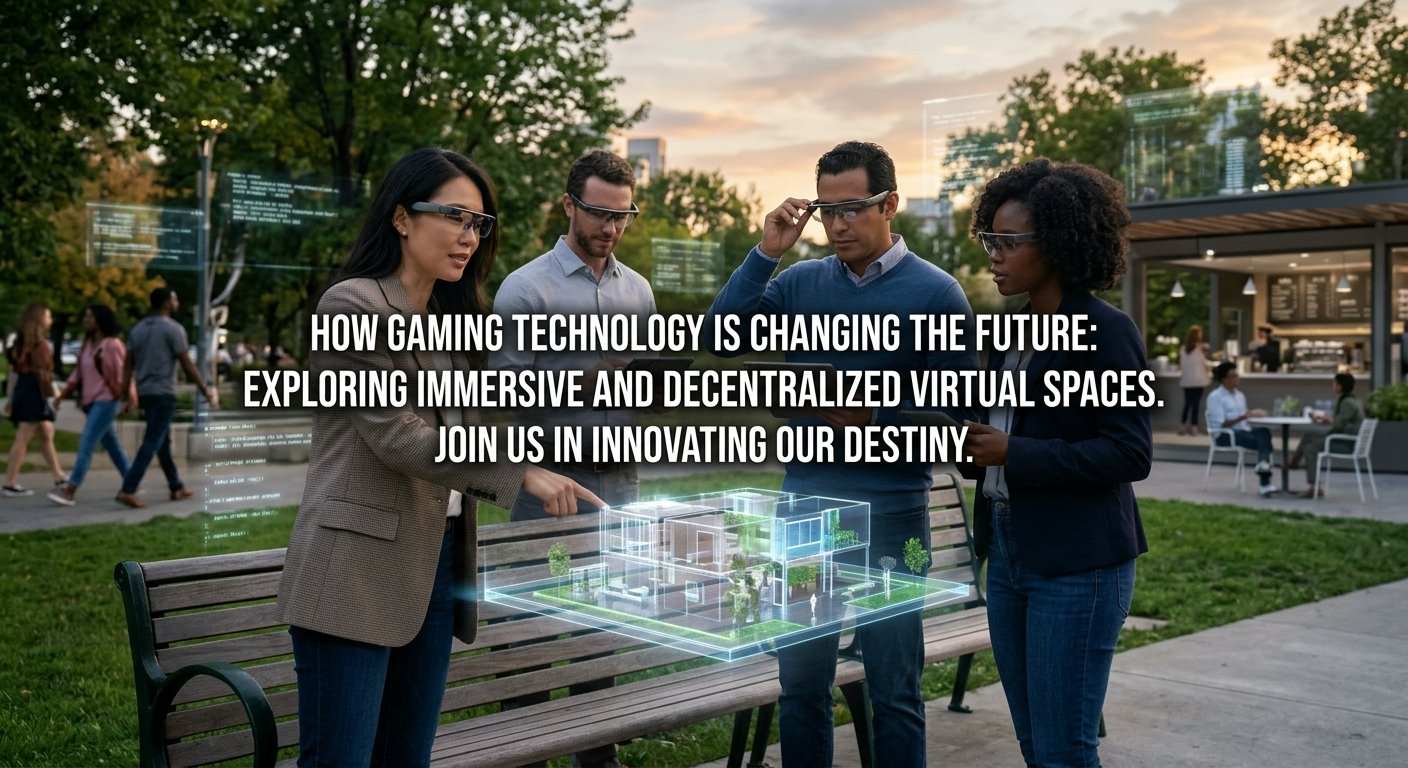
Players can now explore detailed virtual environments, compete with people from different countries, and enjoy games on smartphones, computers, and consoles. New technologies are also making gaming more accessible and introducing experiences that were difficult to imagine in the past.
The future of gaming will likely involve even more realistic graphics, intelligent game characters, immersive environments, and flexible ways to access games. These innovations may also influence industries beyond entertainment, including education, healthcare training, engineering, and digital communication.
In this article, we will explore how gaming technology is changing the future, the major innovations shaping the industry, and what players can expect from the next generation of video games.
1. Artificial Intelligence Is Making Games Smarter
Artificial intelligence, commonly known as AI, is becoming an important part of modern game development. It helps developers create more intelligent characters, dynamic environments, and interactive experiences.
In older games, non-player characters often followed simple programmed instructions. Their actions were usually predictable, and players could quickly understand their behavior.
Modern AI systems can support more complex character behavior. Enemies may react to player actions, characters may follow different strategies, and game environments can respond to changing situations.
AI can also help developers improve game testing, animation workflows, and content creation. Some development tools use machine learning to assist with tasks such as generating ideas, identifying bugs, and analyzing gameplay data.
Another potential application is personalized gaming. Future games may adapt certain challenges or experiences according to a player’s progress and preferences.
However, AI does not automatically make every game better. Good game design still requires creativity, balance, storytelling, and careful development.
2. Virtual Reality Is Creating Immersive Gaming Experiences
Virtual reality, or VR, is one of the most exciting technologies in modern gaming. It allows players to enter computer-generated environments using special headsets and motion-tracking equipment.
Unlike traditional gaming, where players watch a screen, VR places them inside a virtual environment. They can look around, interact with objects, and experience digital spaces from a first-person perspective.
Games designed for VR can offer activities such as exploring virtual worlds, solving puzzles, participating in sports simulations, and experiencing interactive adventures.
Devices such as Meta Quest headsets and PlayStation VR2 demonstrate how VR technology is being used in gaming.
VR is also developing beyond entertainment. Similar technologies can support simulations and training activities where users need to practice tasks in controlled digital environments.
Although VR still faces challenges involving cost, comfort, hardware requirements, and motion sickness, improvements in headsets and tracking systems may make it more accessible in the future.
3. Augmented Reality Is Connecting Games with the Real World
Augmented reality, also known as AR, combines digital objects with the real-world environment.
Unlike virtual reality, which creates a fully digital experience, augmented reality adds computer-generated elements to what users see around them.
Smartphones and AR-enabled devices can display digital characters, objects, and interactive information through cameras and sensors.
Pokémon GO is a famous example of augmented reality gaming. It allows players to explore real-world locations while interacting with digital Pokémon through their mobile devices.
AR technology creates opportunities for new gaming experiences. Players may be able to interact with virtual characters in their homes, explore location-based challenges, or participate in games that combine physical movement with digital activities.
Future developments in AR glasses and wearable devices may make these experiences more natural and convenient.
4. Cloud Gaming Is Changing How People Access Games
Cloud gaming is changing the traditional way people play video games. Instead of running the entire game on a powerful local device, cloud gaming services process much of the gameplay on remote servers and stream the result to the player.
This means users may be able to play certain demanding games without owning expensive gaming hardware.
Services such as NVIDIA GeForce NOW and Xbox Cloud Gaming demonstrate how cloud-based gaming works.
Players generally need a compatible device, a supported service, and a reliable internet connection. The game runs on remote hardware, while player inputs are sent over the network and the resulting video is streamed back.
Cloud gaming offers several potential advantages:
- Access to demanding games on supported devices.
- Reduced dependence on powerful local hardware.
- Easier access to game libraries through supported services.
- Flexible gaming across compatible screens.
- Less need to download and install certain games locally.
However, internet speed, latency, data limits, subscription costs, and regional availability can affect the experience.
As network infrastructure improves, cloud gaming may become an increasingly important part of the gaming industry.
5. Advanced Graphics Are Making Games More Realistic
Graphics technology has made enormous progress since the early days of video games.
Modern games can display detailed characters, realistic lighting, complex environments, and impressive visual effects. These developments are supported by powerful graphics processing units, advanced rendering techniques, and improved game engines.
One important development is ray tracing. This technology simulates how light interacts with objects and surfaces to create more realistic reflections, shadows, and lighting effects.
Another important technology is upscaling. Techniques such as NVIDIA DLSS, AMD FSR, and Intel XeSS can help improve performance by rendering images at a lower resolution and reconstructing them at a higher output resolution through different methods.
Modern game engines, including Unreal Engine 5, provide developers with advanced tools for creating detailed environments and complex visual experiences.
As graphics technology improves, games may become even more visually impressive. However, performance, accessibility, artistic direction, and gameplay remain just as important as realistic visuals.
6. Faster Processors Are Improving Gaming Performance
Gaming hardware plays a major role in determining how smoothly modern games run.
Processors, graphics cards, memory, and storage devices work together to handle game calculations, visual rendering, loading times, and background processes.
Modern CPUs can handle complex game systems, while powerful GPUs process detailed graphics and visual effects.
Solid-state drives, particularly NVMe SSDs, have also improved gaming performance by reducing loading times and helping games access large amounts of data more quickly.
Next-generation hardware is expected to continue improving processing power, memory performance, energy efficiency, and graphics capabilities.
These developments will help developers create larger and more detailed gaming environments while supporting more advanced features.
However, high-performance hardware can be expensive. Making games run well on a range of devices remains an important challenge for developers.
7. Mobile Gaming Technology Is Becoming More Powerful
Mobile gaming has become one of the largest parts of the gaming industry. Smartphones are now capable of running visually advanced games that previously required more powerful dedicated hardware.
Improvements in mobile processors, graphics chips, displays, battery technology, and network connectivity have contributed to this development.
Games such as PUBG Mobile, Call of Duty: Mobile, Genshin Impact, and other demanding titles demonstrate the capabilities of modern smartphones.
Mobile gaming technology continues to improve through:
- More powerful mobile processors.
- Higher-refresh-rate displays.
- Improved graphics processing.
- Faster wireless connectivity.
- Better cooling systems.
- More efficient battery management.
Cloud gaming may also allow some smartphones to access games that would otherwise require stronger local hardware.
In the future, mobile devices may become even more important gaming platforms because they combine portability, connectivity, and increasingly powerful computing capabilities.
8. 5G and Faster Internet Are Improving Online Gaming
Internet connectivity is essential for modern multiplayer gaming. Players depend on stable networks to communicate, compete, and interact with other users.
5G technology offers the potential for higher data speeds and lower network latency under suitable conditions.
This can support online multiplayer games, cloud gaming, and other connected experiences.
Lower latency is particularly important in competitive games because delays between player actions and game responses can affect performance.
However, actual results depend on network coverage, congestion, device compatibility, and the quality of the service provider.
Faster internet can also improve the distribution of game updates, digital downloads, and online content.
As connectivity continues to improve, more players may be able to participate in large online gaming environments with fewer technical limitations.
9. Cross-Platform Gaming Is Bringing Players Together
In the past, players using different gaming systems often had to remain within separate multiplayer communities.
Cross-platform gaming is changing this situation by allowing users on supported devices to play together.
For example, some games allow PC, console, and mobile players to participate in the same multiplayer experience.
This development makes gaming more convenient for friends who own different devices. It can also help games maintain larger player communities.
Cross-platform progression is another useful feature. When supported, it allows players to access certain game progress or account information across multiple platforms.
However, crossplay and cross-progression are not available in every game. Developers must also consider differences in controls, performance, and competitive balance.
As gaming technology advances, cross-platform features may become even more important to the overall gaming experience.
10. Game Engines Are Transforming Game Development
A game engine is a software framework that provides developers with tools for creating video games.
Game engines help manage important development tasks, including graphics, physics, animation, audio, and interaction systems.
Popular game engines include Unreal Engine and Unity. They support different types of projects, from mobile games and independent titles to large-scale productions.
Modern game engines offer advanced features such as:
- Realistic lighting and shadows.
- Detailed environmental rendering.
- Physics simulations.
- Character animation systems.
- Audio and visual effects.
- Multiplayer development tools.
- Support for multiple platforms.
These tools help development teams create increasingly complex games.
They also allow smaller studios and independent developers to access technologies that once required much larger development resources.
As game engines improve, developers will have more opportunities to experiment with new visual styles, interactive systems, and gameplay ideas.
11. Virtual Worlds and the Development of Social Gaming
Gaming is increasingly becoming a social experience. Many modern games offer virtual environments where players can communicate, explore, attend events, and create content together.
Games such as Roblox and Minecraft demonstrate how virtual worlds can support activities beyond traditional gameplay.
Players can build environments, participate in community activities, and share their creations with others.
Some games also organize digital concerts, special events, and interactive experiences that bring large groups of players together.
Future virtual environments may provide more advanced social features, including improved avatars, communication tools, and realistic interactions.
However, the term metaverse is often used broadly, and not every virtual world or multiplayer game represents the same type of experience.
The development of social gaming shows that video games are becoming digital spaces where entertainment and communication can overlap.
12. Artificial Intelligence Is Supporting Game Development
AI is not only changing how players experience games; it is also influencing how developers create them.
Game development involves many complex tasks, including designing environments, creating animations, testing systems, and balancing gameplay.
AI-powered tools can assist developers with certain repetitive or time-consuming activities.
For example, machine learning systems may help analyze player behavior, identify unusual patterns, and detect potential software problems.
AI can also support procedural content generation, where algorithms help create environments, objects, or other game elements according to defined rules.
This may allow development teams to experiment with larger worlds and more varied experiences.
Nevertheless, human creativity remains essential. Developers must make important decisions about storytelling, artistic direction, fairness, and gameplay quality.
The future of game development will likely involve a combination of human creativity and advanced technological tools.
13. Gaming Technology Is Influencing Education and Training
Gaming technology is also finding applications outside traditional entertainment.
Interactive simulations can help people learn through practical digital experiences. Instead of only reading instructions, learners may be able to explore environments, complete tasks, and receive feedback.
Educational games can support subjects such as mathematics, science, history, and problem-solving.
Virtual reality can also provide simulated environments for certain training activities. For example, organizations may use virtual simulations to help people practice procedures in controlled conditions.
Game-based learning can make lessons more engaging when it is designed around clear educational objectives.
Gaming technology does not replace teachers or professional training, but it can provide additional tools for learning and practice.
As interactive technology improves, educational applications may become more realistic and accessible.
14. Better Sound Technology Is Improving Immersion
Sound is an important part of the gaming experience. It helps players understand their surroundings, recognize events, and feel more connected to the game world.
Modern audio systems can create more detailed sound environments, including directional effects and spatial audio.
Spatial audio technologies help create the impression that sounds are coming from specific directions or positions.
This can be especially useful in competitive games, where identifying the location of footsteps or other sounds may provide important information.
Advanced sound design also improves storytelling. Music, environmental sounds, and character voices can make virtual worlds feel more believable.
Future developments in audio processing and headphones may make gaming environments even more immersive.
15. The Future of Gaming Consoles and Hardware
Gaming consoles continue to evolve through improvements in processing power, graphics, storage, controllers, and online services.
Modern consoles are designed to support high-resolution graphics, faster loading times, and more advanced gaming experiences.
Newer hardware generations may provide improved performance, better energy efficiency, and support for more complex game systems.
Handheld gaming devices are also becoming increasingly powerful. They allow players to enjoy a wider range of games while travelling or away from a traditional gaming setup.
Accessories such as advanced controllers, gaming headsets, and displays also contribute to the overall experience.
The future of gaming hardware will likely involve a combination of powerful home systems, portable devices, cloud services, and improved connectivity.
16. Challenges Facing Future Gaming Technology
Although gaming technology offers exciting possibilities, it also creates challenges that developers, companies, and players must consider.
High hardware costs: Powerful gaming computers, consoles, and VR equipment may be expensive for many users.
Internet dependency: Cloud gaming and online multiplayer experiences require reliable connectivity.
Privacy and security: Connected games may collect personal and account-related information, making data protection important.
Digital addiction and excessive gaming: Spending too much time playing can affect sleep, education, work, and daily responsibilities.
Technical limitations: Advanced graphics, AI, and immersive environments require significant computing resources.
Accessibility: Developers must consider players with different abilities, budgets, and hardware limitations.
Ethical use of AI: AI-generated content, player data, and automated systems require responsible development and appropriate safeguards.
Addressing these challenges will help make future gaming technology more accessible, secure, and enjoyable.
17. What Can Players Expect from the Future of Gaming?
The future of gaming will likely combine several technologies rather than depend on one major innovation.
Players may experience more intelligent characters, realistic environments, advanced multiplayer systems, and flexible access through cloud-based services.
Virtual and augmented reality may create new ways to interact with digital worlds, while improvements in mobile hardware may make high-quality gaming available to more people.
Game developers may also use advanced tools to create larger worlds and more personalized experiences.
Cross-platform systems could further connect players across different devices, while improved online infrastructure may support more responsive multiplayer environments.
However, the future will not be determined by technology alone. Good gameplay, creative storytelling, fair competition, affordability, and player communities will remain important.
The most successful innovations will be those that improve the overall gaming experience rather than simply adding complexity.
Conclusion
Gaming technology is changing the future by transforming how video games are developed, accessed, and experienced. Artificial intelligence is supporting smarter game systems, virtual reality is creating immersive environments, and augmented reality is connecting digital experiences with the real world.
Cloud gaming is introducing new ways to access games, while advanced graphics, powerful processors, and faster internet connections are improving performance and visual quality.
Mobile gaming, cross-platform systems, and social virtual worlds are also making gaming more accessible and connected.
These developments may influence industries beyond entertainment, including education, training, and digital communication. At the same time, challenges involving cost, privacy, accessibility, and responsible gaming must be addressed.
Ultimately, the future of gaming will be shaped by a combination of technological innovation and creative ideas. As developers continue exploring new possibilities, video games are likely to become more interactive, accessible, and immersive than ever before.
Leave a Reply