Introduction
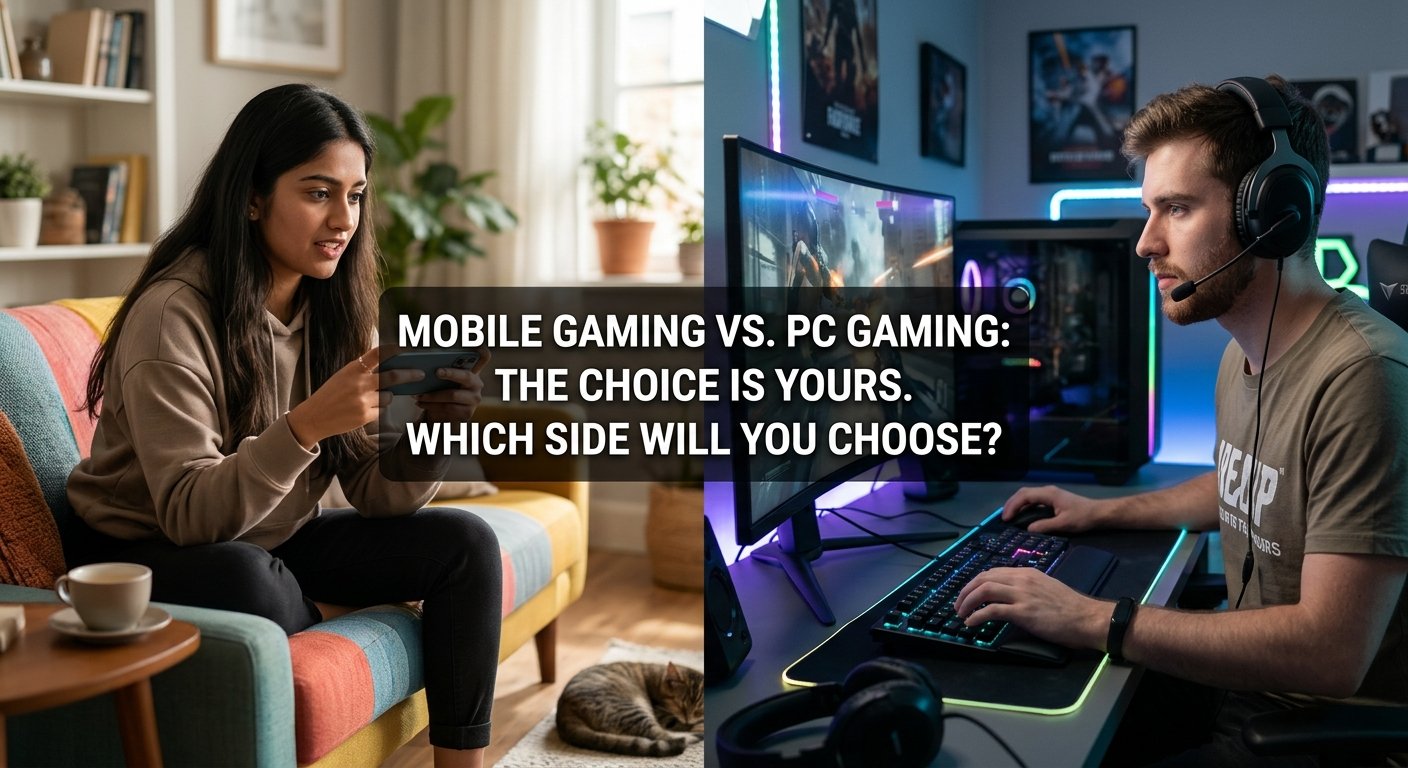
Gaming has become one of the most popular forms of entertainment in the modern digital world. Millions of people enjoy playing video games on different devices, especially smartphones and personal computers. With the rapid development of technology, both mobile gaming and PC gaming have improved significantly, offering players exciting experiences, advanced graphics, and access to thousands of games. However, many gamers often ask an important question: Mobile Gaming vs PC Gaming, which is better? Both platforms have unique advantages and disadvantages that influence the overall gaming experience. Mobile gaming is popular because of its convenience, portability, and accessibility, while PC gaming is known for powerful hardware, advanced graphics, customizable controls, and competitive performance. Some players prefer mobile games because they can enjoy gaming anywhere, whereas others choose computers for immersive gameplay and greater control. The best option depends on individual preferences, budget, gaming requirements, and the types of games someone enjoys. Understanding the differences between these two platforms can help players make better decisions and choose the gaming experience that suits their needs.
What Is Mobile Gaming?
Mobile gaming refers to playing video games on portable electronic devices such as smartphones and tablets. It has become one of the largest segments of the gaming industry because smartphones are widely available and allow people to enjoy games without purchasing dedicated gaming hardware. Mobile games are designed to work with touchscreen controls, making them accessible to beginners and experienced players. Popular mobile titles include PUBG Mobile, Free Fire, Call of Duty: Mobile, Mobile Legends, Clash of Clans, and Candy Crush Saga. These games offer different experiences, including shooting, strategy, sports, racing, puzzles, and multiplayer competition. Modern smartphones feature powerful processors, high-resolution displays, improved graphics capabilities, and larger batteries, allowing them to support increasingly advanced games. Mobile gaming also provides flexible entertainment because players can enjoy short or long gaming sessions in different locations. Its combination of accessibility, affordability, and convenience has made it an important part of modern digital entertainment.
What Is PC Gaming?
PC gaming refers to playing video games on personal computers, including desktops and gaming laptops. It is popular among players who want advanced performance, customizable hardware, detailed graphics, and greater control over their gaming experience. Unlike smartphones, gaming computers can support powerful graphics cards, high-performance processors, large memory capacities, and specialized cooling systems. These components allow PCs to run demanding games with high resolutions and smooth frame rates, depending on the hardware configuration. Popular PC games include Counter-Strike 2, Minecraft, Grand Theft Auto V, Valorant, Fortnite, Dota 2, and many others. PC gaming also offers flexible control options through keyboards, gaming mice, controllers, and other accessories. Players can customize their systems, upgrade individual components, install modifications, and adjust graphics settings according to their preferences. Although a powerful gaming PC can require a significant investment, it provides a highly customizable platform for entertainment, competitive gaming, and creative activities.
1. Graphics and Visual Quality
Graphics are one of the most noticeable differences between mobile gaming and PC gaming. Modern smartphones have improved considerably, and many high-end devices can display impressive textures, animations, lighting effects, and detailed environments. Games such as Genshin Impact and PUBG Mobile demonstrate how advanced mobile graphics have become. However, smartphones usually have limitations related to processing power, heat management, and battery consumption. PC gaming generally offers greater graphical capabilities because desktop computers can use powerful dedicated graphics cards and advanced processors. Players can enjoy higher resolutions, detailed textures, realistic lighting, and additional visual effects when supported by their hardware and games. PC games also provide more adjustable graphics settings, allowing users to balance visual quality and performance. For players who prioritize realistic visuals and detailed environments, PC gaming often provides the stronger experience.
2. Performance and Processing Power
Performance is another important factor when comparing mobile gaming and PC gaming. Smartphones use compact processors designed to balance performance, battery life, and heat production. Modern mobile chipsets can run demanding games smoothly, but performance may decrease during extended gaming sessions because of thermal limitations. PC systems generally offer more processing power, especially when equipped with modern desktop processors and dedicated graphics cards. They can handle demanding games, complex simulations, and multiple background applications more effectively. Players can also upgrade computer components to improve performance over time. Mobile devices provide a convenient all-in-one gaming experience, while PCs offer greater hardware flexibility and performance potential. The actual performance of either platform depends on the device specifications, game optimization, and software settings.
3. Controls and Gaming Experience
Controls have a major influence on how players interact with video games. Mobile gaming usually relies on touchscreen controls, where players tap, swipe, and use virtual buttons to control characters and perform different actions. These controls are easy to understand and convenient for casual games. However, touchscreen controls can sometimes cover parts of the display or make precise movements more difficult, particularly in competitive shooting games. PC gaming provides physical keyboards and mice that offer greater control over movement, aiming, and complex actions. Players can assign different functions to keyboard keys and adjust mouse sensitivity according to their preferences. Some PC games also support controllers, joysticks, and other accessories. While mobile controls are convenient and accessible, PC controls often provide greater precision for games that require accurate movement and fast reactions.
4. Portability and Convenience
Portability is one of the strongest advantages of mobile gaming. Smartphones are lightweight devices that people can carry almost everywhere. Players can enjoy their favorite games while travelling, waiting for appointments, or relaxing outside their homes, provided they have sufficient battery power and any required internet connection. Mobile gaming does not require a permanent desk or specialized gaming setup. PC gaming, especially desktop gaming, is generally less portable because computers, monitors, keyboards, and other accessories require a dedicated space. Gaming laptops offer a more portable alternative, but they are often heavier and less convenient than smartphones. Their battery life can also be limited during demanding gaming sessions. For people who want entertainment while travelling or moving between locations, mobile gaming is usually the more convenient option.
5. Cost and Affordability
Cost is an important consideration when choosing between mobile gaming and PC gaming. Most people already own smartphones, which means they can start playing many mobile games without purchasing additional hardware. There are also numerous free-to-play mobile titles that make gaming accessible to a wide audience. However, high-end smartphones can be expensive, especially when users want advanced displays, powerful processors, and better cooling systems. PC gaming can require a larger initial investment because players may need a computer, monitor, keyboard, mouse, and other accessories. Gaming computers with powerful graphics cards can be particularly expensive. Nevertheless, PCs offer different price ranges and allow users to upgrade individual components gradually. Both platforms also include free and paid games, downloadable content, and optional purchases. Mobile gaming is generally easier to start with, while PC gaming may offer greater customization for players willing to invest in hardware.
6. Game Selection and Variety
Both mobile gaming and PC gaming offer thousands of titles across different genres. Mobile platforms are particularly strong in casual games, battle royale experiences, puzzle games, sports games, and accessible multiplayer entertainment. Games such as Free Fire, PUBG Mobile, Clash Royale, and Mobile Legends have attracted large audiences. PC gaming offers an extensive library of strategy games, role-playing games, simulation titles, first-person shooters, survival games, and complex adventure experiences. Many major PC titles provide detailed campaigns, extensive customization, and advanced gameplay systems. Some games are available on both platforms, while others are designed specifically for mobile devices or computers. PC gaming generally offers a wider selection of demanding and specialized gaming experiences, whereas mobile gaming provides convenient access to many popular genres.
7. Multiplayer and Online Gaming
Online multiplayer gaming has become an important feature of both platforms. Mobile games allow players to compete and cooperate with friends through internet connections, making social gaming accessible to a large audience. Popular titles such as PUBG Mobile and Call of Duty: Mobile include multiplayer modes, team competitions, and communication features. PC gaming also has a strong online multiplayer environment, with games such as Counter-Strike 2, Valorant, League of Legends, and Dota 2 attracting dedicated communities. PCs often provide additional communication and customization options through gaming applications, voice chat software, and community platforms. Both platforms allow players to participate in online matches and connect with people worldwide. However, the quality of multiplayer experiences depends on internet speed, server availability, latency, and game optimization rather than the device alone.
8. Battery Life and Power Consumption
Battery life is a major consideration for mobile gamers. Smartphones operate using rechargeable batteries, and demanding games can consume significant power. High screen brightness, advanced graphics, internet connectivity, and intensive processing can reduce battery life during extended sessions. Some players use fast chargers or external power banks to continue gaming, but frequent charging may affect convenience. Desktop gaming computers generally operate through a continuous electrical power supply, so players do not need to worry about battery limitations during normal use. Gaming laptops are an exception because their battery life can decrease significantly when running demanding games. PCs may consume more electricity than smartphones, particularly high-performance desktop systems. Therefore, mobile gaming offers battery-powered portability, while desktop PC gaming provides longer sessions without depending on an internal battery.
9. Storage and Game Downloads
Storage is another important difference between mobile and PC gaming. Smartphones usually provide limited internal storage compared with desktop computers. Modern mobile games can require several gigabytes of space, especially when they include high-resolution graphics, downloadable maps, and additional content. Players may need to remove unused applications or files to install new games. Some smartphones also support external storage, although not every game can use it. PC gaming offers more storage flexibility because users can install larger solid-state drives or hard disk drives. Many gaming computers provide enough storage for multiple large games, software applications, and personal files. Players can also add additional storage devices when required. For people who maintain large gaming libraries, PC gaming generally provides more convenient storage expansion.
10. Customization and Personalization
Customization is one of the strongest features of PC gaming. Computer players can change graphics settings, control layouts, screen resolutions, keyboard shortcuts, and other performance options. They can also upgrade hardware components such as graphics cards, processors, memory, and storage devices. Many PC games support modifications, commonly known as mods, which allow players to introduce new features, characters, maps, and visual improvements. Mobile games also offer customization options, including control layouts, sensitivity settings, graphics adjustments, character appearances, and cosmetic items. However, mobile hardware is generally less flexible because most smartphone components cannot be upgraded individually. PC gaming provides more opportunities for technical customization, while mobile gaming focuses on simpler settings and accessible personalization.
11. Competitive Gaming and Esports
Competitive gaming has grown significantly on both mobile and PC platforms. Mobile esports includes tournaments for games such as PUBG Mobile, Free Fire, and Mobile Legends. These competitions attract professional players, teams, sponsors, and international audiences. Mobile esports has become particularly popular in regions where smartphones are more accessible than expensive gaming computers. PC esports includes titles such as Counter-Strike 2, Valorant, League of Legends, and Dota 2. These games often feature professional leagues, international championships, and organized competitive environments. PC gaming is particularly established in traditional esports because of its precise controls and specialized competitive hardware. However, mobile esports continues to grow and provides opportunities for players who prefer smartphone gaming. Both platforms have created professional gaming communities and career opportunities.
12. Heating and Cooling Systems
Heat management is an important issue in gaming devices. Smartphones have compact designs, which limits the space available for cooling systems. During demanding gaming sessions, devices may become warm or hot, particularly when running games with high graphics settings. Excessive heat can cause performance throttling, reducing processing speed to protect internal components. PC gaming systems generally have larger cooling solutions, including fans, heatsinks, liquid cooling systems, and improved airflow. These systems help maintain stable performance during demanding workloads. Gaming laptops have smaller cooling systems than desktop computers, so their temperatures can also increase during extended sessions. Overall, desktop PCs usually provide better cooling flexibility, while smartphones must balance performance with their compact design.
13. Gaming for Casual Players
Mobile gaming is particularly suitable for casual players who want simple and accessible entertainment. Many mobile games feature straightforward controls, short matches, and easy-to-understand objectives. Players can enjoy puzzles, racing games, sports games, and casual adventures without spending significant time learning complicated systems. PC gaming also offers casual experiences, but it is often associated with longer sessions and more advanced gameplay options. Casual computer games, simulation titles, and strategy experiences remain popular among people who prefer playing on larger screens. The best platform for casual gaming depends on individual preferences. People who value convenience may prefer smartphones, while those who enjoy a comfortable desk setup may choose a computer.
14. Gaming for Professional and Serious Players
Serious gamers often consider performance, control precision, reliability, and customization when selecting a platform. PC gaming is especially attractive to players who participate in competitive tournaments or enjoy technically demanding games. High-refresh-rate monitors, mechanical keyboards, gaming mice, and powerful graphics cards can provide advantages in supported games. Mobile gaming also has a strong competitive audience, and professional mobile players use specialized smartphones, accessories, and optimized settings. Competitive mobile games have their own tournaments and professional teams. However, not every professional gamer uses the same platform. The best choice depends on the game, competition rules, available equipment, and individual skill. Both platforms provide opportunities for serious gaming.
15. Internet Requirements and Connectivity
Internet connectivity plays an important role in modern gaming. Both mobile and PC games may require internet access for multiplayer matches, updates, cloud services, and digital downloads. Mobile gaming can use Wi-Fi or supported cellular networks, giving players flexibility when they are away from home. However, cellular connectivity may involve data costs, inconsistent coverage, and varying latency. PC gaming generally uses home broadband connections, Ethernet cables, or Wi-Fi networks. Wired Ethernet connections can provide stable connectivity for competitive gaming, depending on the network setup. Offline games are also available on both platforms, allowing players to enjoy certain experiences without continuous internet access. For online competition, a stable connection is more important than simply choosing a smartphone or computer.
16. Which Platform Is Better for Different Game Genres?
Different gaming genres can perform better on different platforms. Mobile devices are popular for casual puzzles, quick racing games, mobile sports titles, and touchscreen-based experiences. Battle royale games are also highly successful on smartphones because they provide accessible multiplayer competition. PC gaming is often preferred for strategy games, complex simulations, competitive shooters, and games that require precise keyboard and mouse controls. Role-playing games and open-world adventures can be enjoyable on both platforms, depending on their design and technical requirements. Some games support cross-platform play, allowing players on different devices to participate together. The ideal platform therefore depends on the gameplay mechanics and the experience developers intend to provide.
17. The Future of Mobile Gaming
The future of mobile gaming looks promising because smartphone technology continues to improve. Modern mobile processors are becoming more powerful, displays are offering higher refresh rates, and battery technologies are developing. These improvements allow developers to create more detailed games with advanced visual effects and smoother performance. Cloud gaming may also expand access to demanding titles on supported mobile devices. Artificial intelligence could introduce smarter characters, personalized gameplay, and improved game development tools. Mobile gaming may also benefit from better controllers, cooling accessories, and faster internet connections. As smartphones become more capable, the difference between mobile and traditional gaming experiences may become smaller in certain areas.
18. The Future of PC Gaming
PC gaming is also expected to experience major technological improvements. New processors, graphics cards, storage technologies, and display systems will continue to improve performance and visual quality. Artificial intelligence may help developers create more realistic environments, intelligent characters, and advanced simulation systems. Virtual reality and other immersive technologies could introduce new ways to interact with digital worlds. Cloud-based services may also provide additional gaming options for computer users. Another important development is the continued growth of cross-platform gaming, which allows people using different devices to play together in supported titles. PC gaming will likely remain attractive because of its hardware flexibility, customization, and support for a wide range of game genres.
Mobile Gaming vs PC Gaming: Quick Comparison
Mobile gaming and PC gaming each offer different advantages. Smartphones are more portable, easier to access, and convenient for short gaming sessions. Computers generally provide stronger hardware options, better customization, and more precise controls. Mobile gaming can be a suitable starting point for beginners, while PC gaming may appeal to players who want advanced performance and a dedicated gaming setup. Neither platform is perfect for every player. The right choice depends on personal preferences, financial resources, gaming interests, and available equipment. Understanding these differences allows gamers to choose a platform that provides the most enjoyable experience.
Conclusion: Which Is Better, Mobile Gaming or PC Gaming?
The comparison between mobile gaming and PC gaming shows that both platforms have important advantages. Mobile gaming is an excellent choice for people who value portability, convenience, accessibility, and affordable entertainment. It allows players to enjoy popular titles almost anywhere without carrying a complete gaming setup. PC gaming is generally better for people who prioritize advanced graphics, powerful performance, precise controls, customization, and a large selection of demanding games. It also provides extensive opportunities for competitive gaming and hardware upgrades. However, there is no single platform that is best for everyone. Casual players may prefer smartphones, while competitive and technology-focused gamers may choose PCs. Many gaming enthusiasts enjoy both platforms because they provide different experiences. Ultimately, the better option is the one that matches your budget, interests, lifestyle, and gaming expectations.
Leave a Reply