Introduction
Video games have changed dramatically over the years. What began as a simple form of entertainment has developed into a worldwide industry involving millions of players, professional teams, international tournaments, and huge online audiences. One of the biggest developments in modern gaming is the rise of esports.
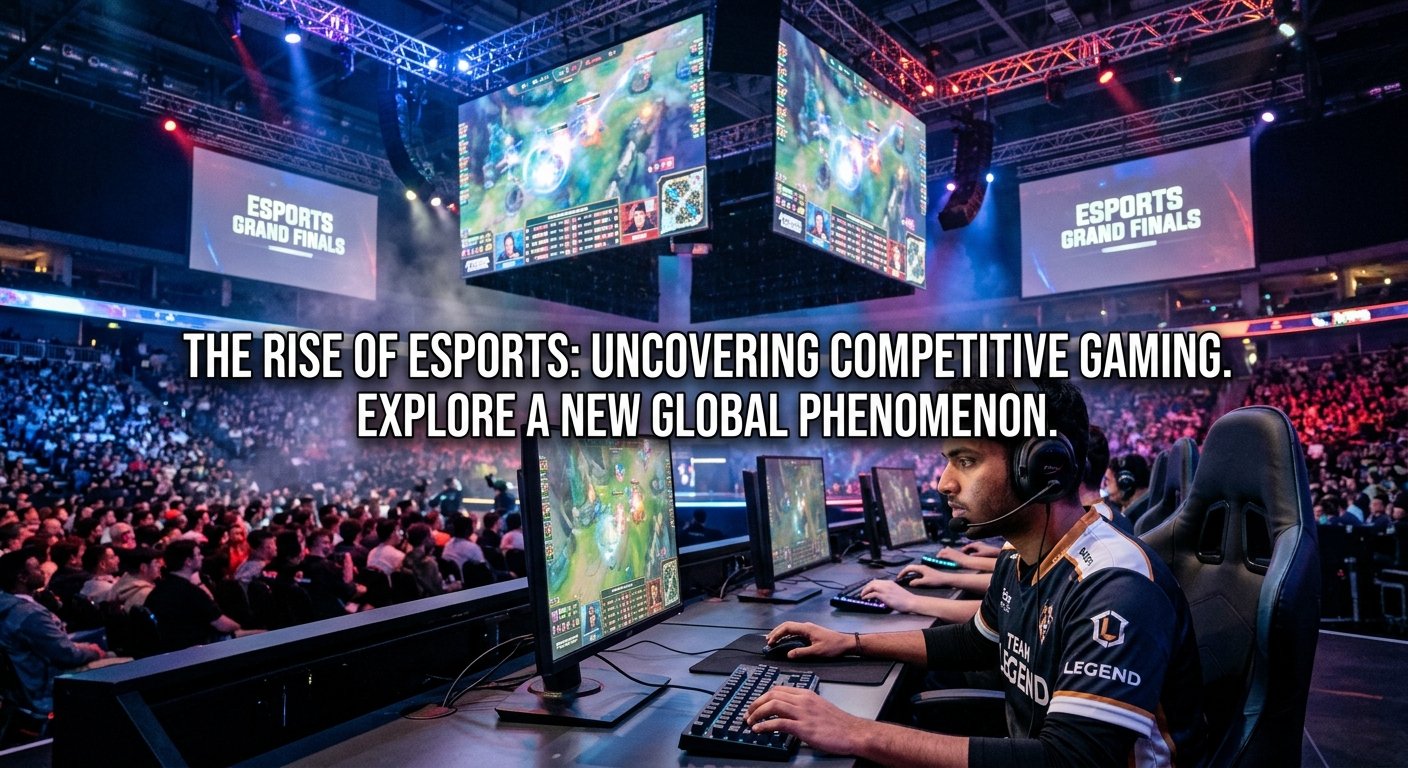
Esports, also known as electronic sports, refers to organized competitive gaming in which individuals or teams compete against one another in video games. Similar to traditional sports, esports involves practice, teamwork, strategy, competition, and professional performance. Players compete in local events, online leagues, and international tournaments to demonstrate their skills and win prizes.
Games such as League of Legends, Counter-Strike 2, Dota 2, Valorant, Fortnite, and Mobile Legends: Bang Bang have helped make competitive gaming popular around the world. Millions of fans watch professional matches through streaming platforms, while talented players build careers by competing at the highest level.
The growth of esports has also created opportunities for coaches, commentators, content creators, tournament organizers, sponsors, and game developers. It has become an important part of the entertainment and gaming industries.
In this article, we will explain what esports is, how it developed, why it became popular, how professional competitions work, and what the future may hold for competitive gaming.
1. What Is Esports?
Esports is a form of organized competition based on video games. Players compete individually or as members of teams to achieve specific objectives and defeat their opponents.
The word esports combines the terms electronic and sports. It describes competitive video gaming that follows organized rules and structured competition formats.
Unlike casual gaming, esports usually involves serious preparation. Professional players spend time improving their skills, studying opponents, practicing strategies, and working with teammates.
Different games require different abilities. Some esports titles focus on shooting accuracy and quick reactions, while others involve strategic planning, teamwork, resource management, or decision-making.
For example, Counter-Strike 2 focuses on tactical shooting and team coordination. League of Legends requires players to understand characters, objectives, and team strategies. Fighting games often emphasize timing, precision, and knowledge of individual matchups.
Esports competitions can take place online or at physical venues. Major events may feature professional teams, live audiences, commentators, sponsors, and significant prize pools.
2. The History of Competitive Gaming
Competitive gaming is not a completely new idea. It began decades before esports became a mainstream global industry.
Early video game competitions took place in arcades, universities, and gaming communities. Players competed to achieve high scores and establish themselves as the best performers.
As home computers and gaming consoles became more popular, competitive gaming expanded. Players began organizing local tournaments and challenging one another through multiplayer games.
The development of the internet created a major turning point. Online multiplayer technology allowed players to compete without being in the same physical location. Gaming communities grew, and organized competitions became easier to arrange.
During the 2000s, professional gaming developed further through organized leagues, sponsorships, and international tournaments. Games such as Counter-Strike and Warcraft III became important parts of the competitive gaming scene.
Later, the popularity of League of Legends, Dota 2, and other major titles helped esports attract larger audiences. Streaming platforms made it possible for fans to watch tournaments from anywhere in the world.
Today, esports includes a wide variety of games, professional organizations, regional leagues, and international events.
3. Why Has Esports Become So Popular?
Several factors have contributed to the rapid growth of esports.
Online streaming: Platforms such as Twitch and YouTube allow fans to watch tournaments, professional matches, and live gameplay from anywhere.
Global accessibility: Players can compete with people from different countries without travelling to a physical venue.
Competitive excitement: Close matches, skilled performances, unexpected victories, and dramatic tournament moments make esports entertaining to watch.
Community participation: Fans discuss teams, support players, share highlights, and participate in gaming communities.
Mobile gaming: Smartphones have introduced competitive gaming to audiences who may not own gaming computers or consoles.
Professional opportunities: Players can pursue esports careers, while businesses can work in coaching, broadcasting, marketing, and event management.
These developments have helped competitive gaming move beyond small gaming communities and become an international entertainment activity.
4. The Most Popular Esports Games
Different video games offer different competitive experiences. Some focus on teamwork, others emphasize individual skill, and some combine several forms of competition.
Here are some important games that have helped shape the esports industry.
League of Legends
League of Legends is one of the most recognized competitive multiplayer games. It is a team-based strategy game in which two teams attempt to destroy the opposing team’s main structure.
Players choose different champions, each with unique abilities and roles. Success requires communication, map awareness, teamwork, and strategic planning.
Its organized professional leagues and international competitions have helped establish it as a major esports title.
Counter-Strike 2
Counter-Strike 2 is a tactical first-person shooter in which teams compete in objective-based matches.
Players need accurate shooting, effective communication, strong positioning, and careful use of equipment. Team coordination is especially important because individual mistakes can affect the entire match.
The Counter-Strike competitive scene has a long history and includes professional teams and international tournaments.
Dota 2
Dota 2 is a multiplayer online battle arena game known for its complex strategies and competitive depth.
Players select heroes with different abilities and work together to destroy the enemy team’s base. Understanding team composition, map control, resource management, and timing is essential.
Its major tournaments have helped demonstrate the scale of professional gaming competitions.
Valorant
Valorant combines tactical shooting with character-based abilities. Teams compete in objective-based matches that require communication, precision, planning, and teamwork.
Its competitive structure has helped it become an important title in modern esports.
Fortnite
Fortnite became famous for its battle royale format, where players compete to be the last person or team remaining.
Its competitive scene includes individual and team-based events. The game also offers creative experiences and frequent content updates, helping it maintain a broad audience.
Mobile Legends: Bang Bang
Mobile Legends: Bang Bang is a mobile multiplayer battle arena game with a strong competitive community, particularly in Southeast Asia and other regions.
Its mobile-friendly format makes competitive gaming accessible to people who primarily play on smartphones.
PUBG Mobile
PUBG Mobile has played an important role in expanding mobile esports. Teams compete in battle royale matches where survival, positioning, communication, and strategy are essential.
Its tournaments have helped introduce competitive gaming to large mobile audiences.
5. How Professional Esports Tournaments Work
Professional esports tournaments are organized competitions in which players or teams compete according to specific rules.
A tournament usually begins with registration or qualification. Depending on the event, participants may need to qualify through online matches, regional competitions, or invitation-based selection.
After qualification, competitors enter the main tournament stage. Common competition formats include:
- Single elimination: A team is eliminated after losing a match.
- Double elimination: Teams generally receive another opportunity after their first loss.
- Round robin: Each participant or team competes against other members of the group.
- League format: Teams earn points through scheduled matches over a longer period.
- Playoffs: The strongest competitors advance to determine the tournament champion.
The format depends on the game and the event organizer.
Large esports tournaments may include professional commentators, analysts, live audiences, sponsor presentations, and online broadcasts.
These events create an organized environment in which players can demonstrate their abilities and compete for recognition.
6. The Role of Professional Esports Teams
Professional esports teams are organizations that recruit skilled players and support them in competitive gaming.
These teams may provide training facilities, coaches, analysts, equipment, travel arrangements, and other professional resources.
Players usually specialize in particular games and roles. In team-based titles, every member may have specific responsibilities that contribute to the team’s overall performance.
A professional team may include:
- Starting players.
- Substitute players.
- Head coaches.
- Assistant coaches.
- Performance analysts.
- Team managers.
- Content and media staff.
Teamwork is essential because individual talent alone does not guarantee success. Players must understand one another, follow strategies, and communicate effectively during matches.
Well-managed teams also focus on discipline, practice schedules, and maintaining a positive competitive environment.
7. How Esports Players Train
Professional esports players follow training routines designed to improve their performance.
Although the exact schedule differs between games and teams, preparation usually involves several activities.
Regular practice: Players spend time improving their game knowledge, mechanics, and decision-making.
Team coordination: Teams practice together to develop communication and strategies.
Reviewing gameplay: Players study previous matches to identify mistakes and understand what opponents are doing.
Learning new updates: Games frequently receive balance changes, new characters, maps, or features. Players must adapt to these developments.
Mental preparation: Competitive matches can involve pressure and difficult decisions. Maintaining focus and emotional control is important.
Physical well-being: Sleep, movement, healthy routines, and breaks can support concentration and long-term performance.
Professional gaming requires more than simply playing for long hours. Effective training involves structured practice, analysis, and continuous improvement.
8. The Importance of Streaming Platforms
Streaming platforms have played a major role in the development of esports.
Before online streaming became widely available, fans often depended on television broadcasts, recorded videos, or attending live events.
Today, viewers can watch tournaments and professional matches through platforms such as Twitch and YouTube.
Streaming provides several advantages:
- Fans can watch competitions from different countries.
- Viewers can follow their favorite professional players.
- Tournament organizers can reach international audiences.
- Gaming communities can discuss matches in real time.
- Smaller competitions can gain visibility without traditional television coverage.
Live streaming has also created new opportunities for commentators and content creators.
Some creators focus on professional match analysis, while others produce tutorials, entertainment videos, interviews, and gameplay highlights.
This relationship between esports and streaming has helped competitive gaming reach a much larger audience.
9. How Esports Creates Career Opportunities
Esports has created career opportunities that extend far beyond professional gameplay.
Although becoming a professional player is a common ambition, the industry also needs people with technical, creative, business, and communication skills.
Some important esports careers include:
Professional player: Competes in organized tournaments and represents a team or organization.
Esports coach: Helps players improve strategies, teamwork, and performance.
Commentator: Explains matches and makes competitions more engaging for viewers.
Analyst: Studies gameplay, statistics, and opponents to help teams make better decisions.
Tournament organizer: Plans competitions, manages schedules, and coordinates events.
Content creator: Produces gaming videos, tutorials, interviews, and entertainment content.
Game developer: Creates and maintains video games that may become part of the esports ecosystem.
Marketing specialist: Helps teams, events, and gaming companies connect with audiences and sponsors.
These careers show that esports is an industry with opportunities in several professional fields.
However, success is not guaranteed. People need relevant skills, experience, dedication, and a realistic understanding of the competitive market.
10. The Business Behind Esports
Esports is also a business that involves organizations, sponsors, advertisers, publishers, streaming platforms, and event companies.
Revenue can come from several sources.
Sponsorships: Companies support teams, players, or tournaments in exchange for brand visibility.
Advertising: Businesses promote products through tournament broadcasts, websites, and digital content.
Media and broadcasting rights: Organized competitions may generate income through agreements that allow platforms to broadcast events.
Merchandise: Teams and gaming organizations may sell clothing, accessories, and branded products.
Ticket sales: Physical tournaments can generate revenue through audience attendance.
Digital products: Some games offer optional purchases, cosmetic items, and other digital content.
The business model differs between esports titles and organizations. Not every team or tournament is profitable, and financial sustainability remains an important challenge for the industry.
Nevertheless, esports has developed a commercial ecosystem that connects gaming with marketing, entertainment, technology, and international business.
11. The Role of Mobile Esports
Mobile gaming has made competitive gaming accessible to a much wider audience.
Many people around the world use smartphones as their primary gaming devices. This has allowed mobile esports to develop in regions where dedicated gaming computers and consoles may be less accessible.
Games such as PUBG Mobile, Mobile Legends: Bang Bang, and Free Fire have helped establish mobile competitive communities.
Mobile esports offers several advantages:
- Lower hardware requirements compared with many high-end PC setups.
- Easy access through widely available smartphones.
- Opportunities for regional and international competitions.
- The ability to play and practice from different locations.
- A large potential audience of mobile gamers.
However, mobile esports also faces challenges, including device differences, network quality, battery performance, and competition rules.
Its continued growth demonstrates that professional gaming is not limited to traditional computers and consoles.
12. Esports and Traditional Sports
Esports and traditional sports are different, but they share several important features.
Both involve competition, preparation, strategy, teamwork, and performance under pressure.
Traditional sports usually involve physical activities such as running, jumping, and throwing. Esports primarily involves digital environments controlled through computers, consoles, or mobile devices.
Both forms of competition require practice and discipline, although the specific skills and physical demands are different.
Esports also has its own professional structures, including teams, leagues, coaches, tournaments, sponsors, and fans.
Some traditional sports organizations have invested in esports teams or gaming-related projects. This reflects the growing connection between digital entertainment and established sports businesses.
However, esports should be understood as its own competitive field rather than simply treated as identical to traditional sports.
13. Challenges Facing the Esports Industry
Despite its rapid development, esports faces several challenges.
Career stability: Professional players may have relatively short competitive careers, and not everyone earns a sustainable income.
Mental pressure: High expectations, public criticism, and intense competition can affect players’ well-being.
Physical health: Long practice sessions without sufficient breaks may contribute to fatigue, discomfort, and poor daily habits.
Online toxicity: Harassment, cheating, and abusive communication can damage gaming communities.
Financial sustainability: Some organizations depend heavily on sponsorships and may struggle when business conditions change.
Game publisher control: The companies that own competitive games often have significant influence over tournament rules, licensing, and the competitive ecosystem.
Regional inequality: Players in areas with limited internet access, equipment, or financial resources may face additional barriers.
Addressing these issues is important for building a healthier and more sustainable esports industry.
14. The Future of Esports
The future of esports will likely be influenced by technological progress, changing audiences, and new forms of digital entertainment.
Artificial intelligence may support performance analysis, training tools, and game development. Better streaming technology may improve the experience for viewers, while faster internet can support smoother online competitions.
Mobile esports may continue expanding as smartphones become more powerful and accessible.
Virtual reality could introduce new competitive formats, although its long-term role will depend on hardware, game design, comfort, and audience interest.
Cross-platform gaming may also create opportunities for players using different devices to compete together when supported by game developers.
Another important development may be the growth of local esports communities. Schools, universities, gaming clubs, and regional organizations can help introduce more people to organized competition.
The industry will still need to address financial stability, player welfare, fair competition, and responsible community management.
If these challenges are handled effectively, esports can continue developing as a major part of the global gaming industry.
Conclusion
The rise of esports has transformed video games from a popular hobby into an organized form of global competition. Professional players, international tournaments, streaming platforms, and gaming organizations have helped competitive gaming reach audiences around the world.
Esports has also created career opportunities in coaching, broadcasting, game development, event management, marketing, and content creation. Mobile gaming has made competitive experiences accessible to even more people, while online communities have helped fans connect with players and teams.
However, the industry must continue addressing challenges such as career stability, player health, online toxicity, and financial sustainability.
Ultimately, esports represents an important development in modern entertainment. It combines technology, competition, teamwork, creativity, and business in a rapidly changing digital environment. As gaming continues to evolve, competitive gaming is likely to remain an important part of its future.
Leave a Reply